About us

Scrabster is a key hub for economic activity in Caithness, as well as a thriving destination for visitors and the local community.
A multi-purpose port

Scrabster is a multi-purpose port and a key gateway to the North Sea, strategically positioned to support operations across energy, cargo, fishing and cruise. Established by an Act of Parliament in 1841, the harbour has served the North Highlands for nearly two centuries.
Our team is committed to delivering high-quality service to our clients while supporting the community of Caithness as a Trust Port.
Scrabster’s location and modern infrastructure provide a competitive advantage across multiple sectors. More than £57 million has been invested in recent decades to upgrade and expand piers, facilities and laydown capacity, supporting continued growth.
Interactive map
Downloadable map
Click below to explore different elements of the harbour site or download a PDF map via the button.
Our map shows the harbour layout, facilities and depths.
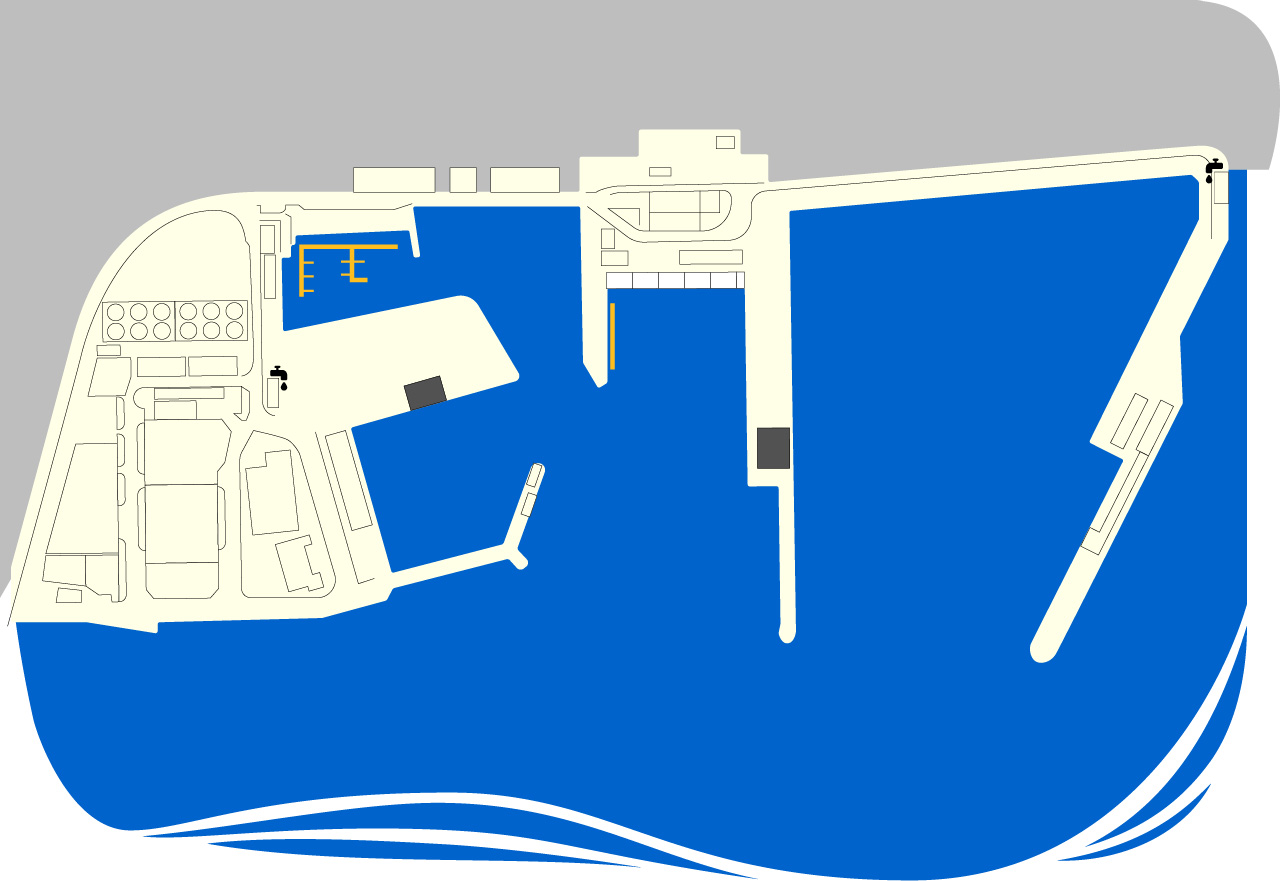
Pontoons
Outer Pontoons
Jubilee Quay
130m
120m
73m
120m
25m
65m
Ice Quay
110m
100m
250m
Fish Dock
Heavy lift area
Heavy lift area
South Breakwater
Fuel Quay
St Ola Pier
Queen Elizabeth Pier
Harbour office and port control

Oil depot
Pontoons
Car park
Lorry park
Business centre
Water tank
Showers and laundry
Fishmarket
Heavy lift area
Heavy lift area
South Breakwater
Terminal building
Lifeboat station
Groupage store
Harbour office and port control
Weighbridge
Ferry marshalling area
Border control
Linkspan
Passenger transit building and walkway
Water tank
Storage compound
Workshops and warehousing
Engineering
Yacht club
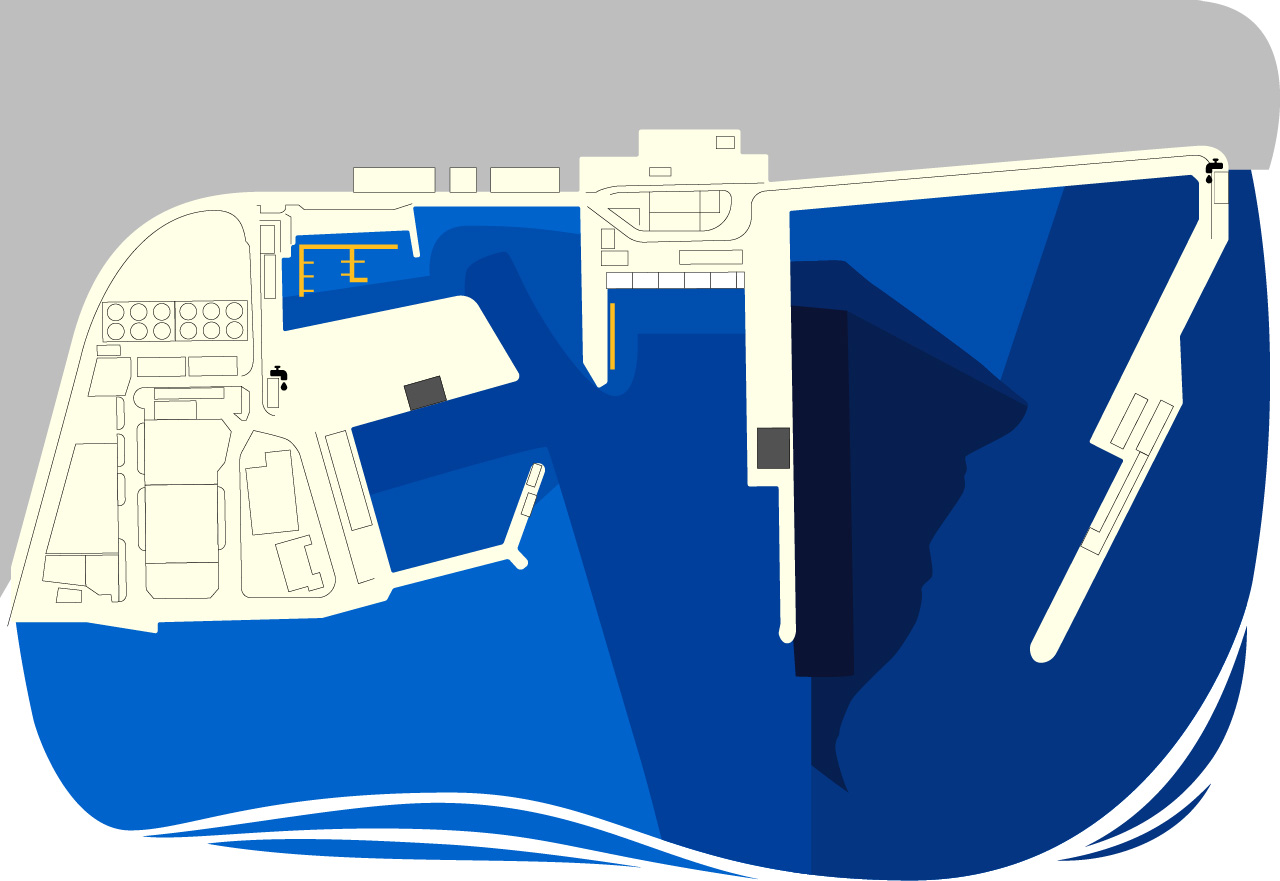
Dredged to 2m
Dredged to 4.5m
Dredged to 3.5m
Dredged to 5m
Dredged to 7.5m
Dredged to 7.5m
Dredged to 9m
Dredged to 8m
Working on Trust
As a Trust Port, Scrabster is an independent statutory body governed by its own legislation and run by an independent board of trustees.
All profits, after corporation tax, are reinvested back into the harbour – supporting infrastructure, operations and the wider community. This model ensures long-term stewardship of the port and sustainable growth for future generations.
Show board code of conduct
Code of Conduct
The Ethical Standards in Public Life etc. (Scotland) Act 2000 provides for new Codes of Conduct for members of public bodies. Although not strictly a public body, Scrabster Harbour Trust does see itself as acting in the local public interest, and consequently would wish to adopt this Code of Conduct.
As a member of Scrabster Harbour Trust it is your responsibility to make sure that you are familiar with, and that your actions comply with, the provisions of this Code of Conduct.
Duty
You have a duty to uphold the law and act in accordance with the law and the public trust placed in you. You have a duty to act in the interests of the Trust.
Selflessness
You have a duty to take decisions solely in terms of the stakeholder interest. You must not act in order to gain financial or other material benefit for yourself, family or friends.
Integrity
You must not place yourself under any financial or other obligation to any individual or organisation that might reasonably be thought to influence you in the performance of your duties.
Objectivity
You must make decisions solely on merit when carrying out Trust business.
Accountability and Stewardship
You are accountable for your decisions and actions to the stakeholders of Scrabster Harbour. You have a duty to consider issues on their merits, taking account of the views of others, and you must ensure that the Trust uses its resources prudently and in accordance with the law.
Openness
You have a duty to be as open as possible about your decisions and actions, giving reasons for your decisions.
Honesty
You have a duty to act honestly. You must declare any private interests relating to your Trust duties and take steps to resolve any conflicts arising in a way that protects the stakeholder interest.
Leadership
You have a duty to promote and support these principles by leadership and example, and to maintain and strengthen the public’s trust and confidence in the integrity of the Trust.
Respect
You must respect fellow board members and employees of the Trust and the role they play, treating them with courtesy at all times.
Confidentiality
There may be times when you will be required to treat discussions, documents or other information relating to the work of the Trust in a confidential manner. You will often receive information of a private nature which is not yet public, or which perhaps would not be intended to be public. You must always respect and comply with the requirement to keep such information private.
It is unacceptable to disclose any information to which you have privileged access, for example derived from a confidential document, either orally or in writing. In the case of other documents and information, you are requested to exercise your judgement as to what should or should not be made available to outside bodies or individuals. In any event, such information should never be used for the purpose of personal or financial gain, or used in such as way as to bring the Trust into disrepute.
Gifts and Hospitality
You must never canvass or seek gifts or hospitality.
You are responsible for your decisions connected with the offer or acceptance of gifts or hospitality and for avoiding the risk of damage to public confidence in the Trust. As a general guide, it is usually appropriate to refuse offers.
You must not accept any offer by way of gift or hospitality which could give rise to a reasonable suspicion of influence on your part to show favour, or disadvantage, to any individual or organisation. The term “gift” includes benefits such as relief from indebtedness, loan concessions, or provision of services at a cost below that generally charged to members of the public. You must not accept repeated hospitality from the same source.
Registration of interests
Separate guidance sets out the kinds of interests, financial and otherwise which you have to register. These are called ‘Registerable Interests’. You must at all times ensure that these interests are registered, when you are appointed and whenever your circumstances change in such a way as to require change or an addition to your entry in the Trust Register.
Declarations of Interest
The key principles of the Code, especially those in relation to integrity, honesty and openness, are given further practical effect by the requirement for you to declare certain interests at Board and Committee meetings. Together with the rules on registration of interests, this ensures transparency of your interests which might influence, or be thought to influence, your actions.
In considering whether to make a declaration in any proceedings, you must consider not only whether you will be influenced but whether anybody else would think that you might be influenced by the interest. You must keep in mind that the test is whether a member of the public, acting reasonably, might think that a particular interest could influence you.
If you feel that, in the context of the matter being considered, your involvement is neither capable of being viewed as more significant than that of an ordinary member of the public, nor likely to be perceived by the public as wrong, you may continue to attend the meeting and participate in both discussion and voting. The relevant interest must however be declared. It is your responsibility to judge whether an interest is sufficiently relevant to particular proceedings to require a declaration and you are advised to err on the side of caution.
Effect of Declaration
Declaring a financial interest has the effect of prohibiting any participation in discussion and voting. A declaration of a non-financial interest involves a further exercise of judgment on your part. You must consider the relationship between the interests which have been declared and the particular matter to be considered and relevant individual circumstances surrounding the particular matter.
In the final analysis the conclusive test is whether, in the particular circumstances of the item of business, and knowing all the relevant facts, a member of the public acting reasonably would consider that you might be influenced by the interest in your role as a member of Scrabster Harbour Trust and that it would therefore be wrong to take part in any discussion or decision-making. If you, in conscience, believe that your continued presence would not fall foul of this objective test, then declaring an interest will not preclude your involvement in discussion or voting. If you are not confident about the application of this objective yardstick, you must play no part in discussion and must leave the meeting room until discussion of the particular item is concluded.
Harbour history
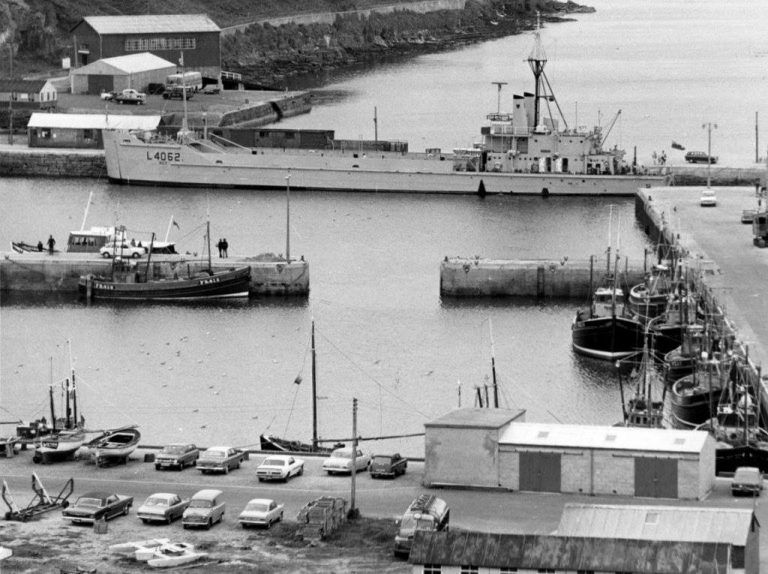
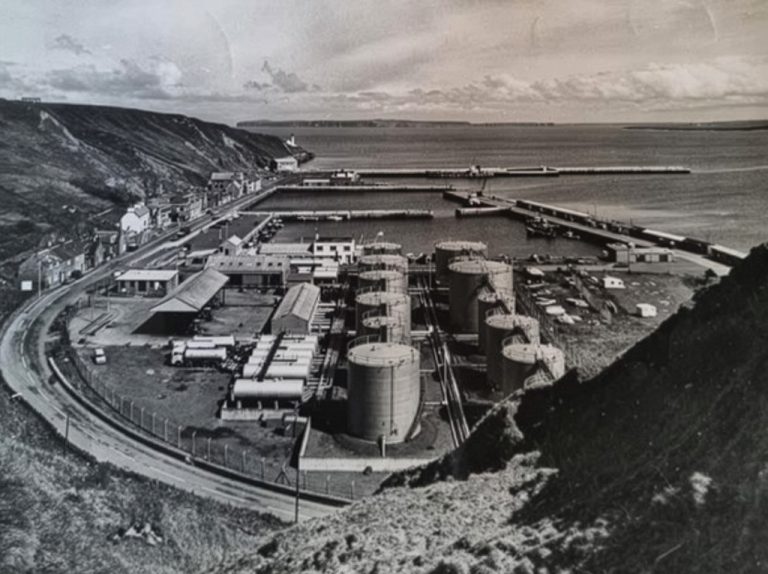
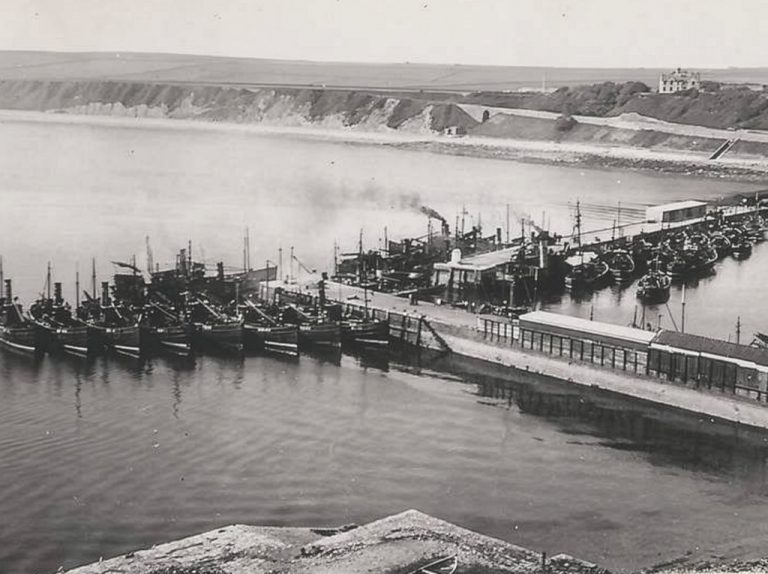
While Scrabster Harbour was formally constituted in the 19th century, the bay dates all the way back to Viking times. In the 1800s, the natural harbour known as Skarabolstadr (‘clifftop homestead’) was favoured by Norse fishermen. The first pier followed in 1820, designed by the celebrated Victorian engineer Thomas Telford.
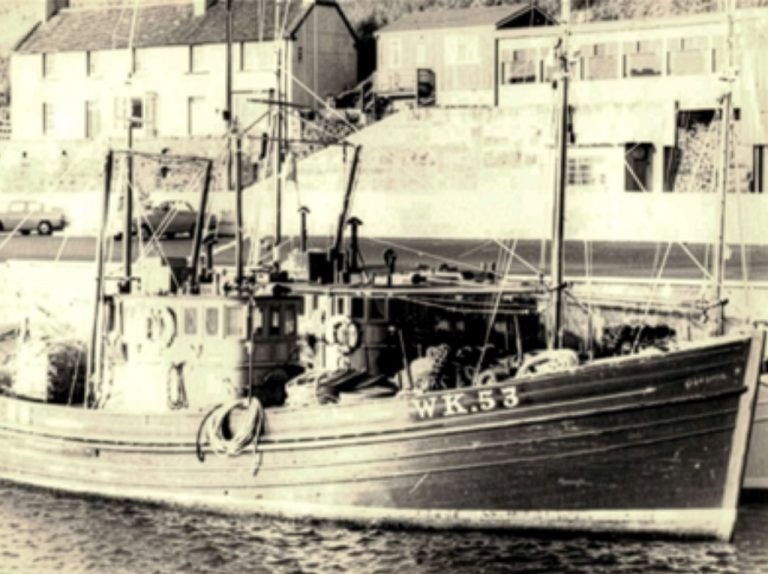
Scrabster Harbour Trust was established by an Act of Parliament in 1841 to provide deep water anchorage to seafarers. Thus began nearly two centuries as a thriving fishing port and fishing market, and today Scrabster remains one of the UK’s leading whitefish and shellfish landing ports.
Scrabster also developed into a key gateway to the northern isles and Scandinavia, with a ferry link to Stromness established in 1856 and the St Ola Pier adding ferry operations from the 1970s onwards.
Timeline
1800s
Established as a fishing and trading harbour
1900s
Expansion includes fish dock, market and business park
1970s
Redeveloped as a modern deep-water port
1976
Scrabster–Stromness ferry service introduced
2003
Queen Elizabeth Quay constructed for larger vessels
2013
£17.6m Jubilee Quay development completed
2017
New plate ice plant installed
2021
£18.7m redevelopment of St Ola Pier completed
Strategy
Scrabster Harbour Trust is focused on delivering a diverse, growth-oriented port, with strategy centred on:
- Energy and cruise growth: Positioning Scrabster as an operations and maintenance base for offshore wind, while supporting Scotland’s cruise tourism sector.
- Core segments: Safeguarding ferry and fishing activity while growing general cargo operations.
- Estate and infrastructure: Maintaining and improving port assets and growing the estate to maximise capacity
- Net zero: Reducing emissions, stabilising energy costs and delivering a practical carbon reduction plan.
Sustainability
Scrabster is committed to supporting the transition to a low-carbon economy and achieving net zero emissions.
A detailed carbon footprint assessment in 2021 established a baseline for improvement, and participation in Scotland’s Net Zero Nation programme is helping to shape a targeted action plan.
Located in a region of global significance for renewable energy, Scrabster is well positioned to support offshore wind and wider energy transition activity, aligning sustainability with long-term growth.